
Flight Officer John (Jack) Durward Robinson
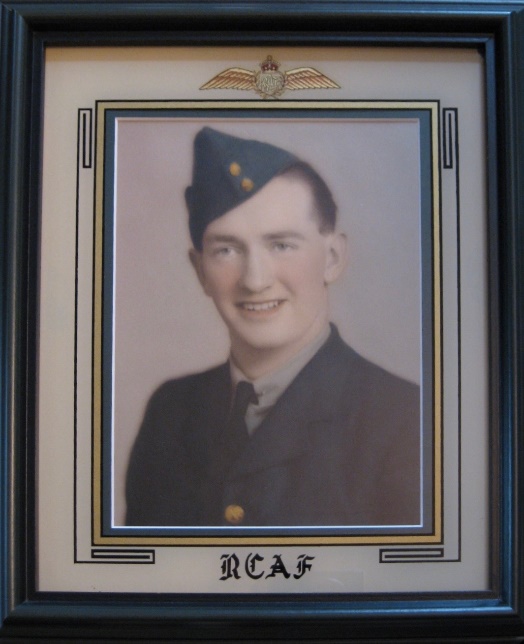
Jack Robinson was born on March 21, 1918 in Rivers, Manitoba, northwest of Brandon. His parents were William Durward Robinson and Annie Helen Henry. Jack’s mother died during the childbirth of his younger sister Margaret. Jack quit school to work on the family farm, but in 1929 tragedy struck the Robinson family again when his sister died at 10 years of age of a childhood disease. William sold the family farm and moved to 71 Dumfries Street in Paris with Jack and their nursemaid.
At 23 years of age, Jack had worked as an equipment operator at Consolidated Sand and Gravel for 9 months before he enlisted with the Royal Canadian Air Force. He was deployed to Gander, Newfoundland on December 2, 1941. An unfortunate knee and wrist injury in France grounded Jack back in Canada and he was honorably discharged on March 28, 1946.
When Jack returned to Paris, he reunited with his girlfriend, Hazel Isabel Lowe, and they later married. They had met pre-war at one of the local dances. Hazel had worked in Southampton during the war, making materials for airplane wings. Dominion Plywoods supplied the plywood for the wooden wings of the de Havilland Mosquito bomber. Its unique design, using plywood and cotton fabric, made it very fast.
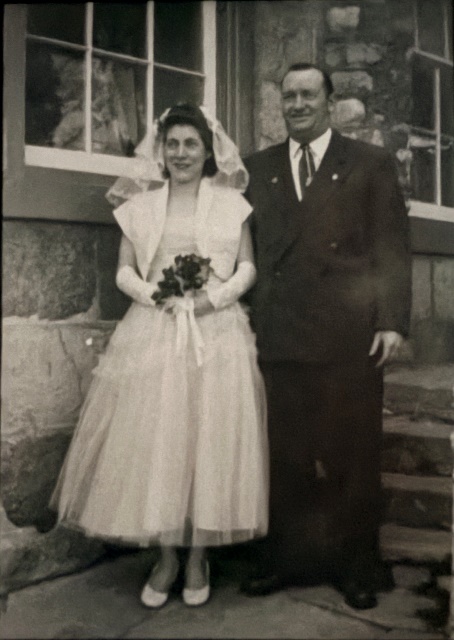
In 1952, Jack joined Hazel’s father, Robert Lowe, in the fire service, becoming a volunteer firefighter. He lived at the fire hall in downtown Paris until he and Hazel got married in 1954, They purchased their “forever home” at 15 Victoria Street in the Victoria Survey off Dundas Street, beside the Paris Cemetery and had one son, Durward Robert “Dewey”. This neighbourhood came to be known as the wartime survey. In a step meant to meet the growing demand for affordable housing, for both defence-related industry workers and returning veterans, the Federal Government jumped into the world of residential development for the first time in the 1940s and Victory Homes were born.
Constructed of prefabricated components (walls and roofs), the homes mimicked the mass production of the war effort. In all, over 30,000 homes were built across Canada under the direction of the Wartime Housing Corporation, later to become Canada Mortgage and Housing Corporation (CMHC) in 1947. Most homes were one storey, with steep pitched roofs and small sash windows. Although some homes had brick exteriors, the majority had clapboard wooden siding. Both centre and side-hall plans were available. The homes typically had an eat-in kitchen, living room, one bathroom and two bedrooms downstairs, with room to expand upstairs into the attic if required. Victory Homes were designed to be comfortable and large enough for a single family. Their unique and recognizable designs have become “classics” in the Canadian urban landscape.
Jack and Hazel were avid curlers and were among the first members and debenture holders of the current Paris Curling Club. They curled well past retirement, and their names can still be seen on several of the trophies at the club. Hazel passed away after a fall and a lengthy hospital stay on February 3, 2004.
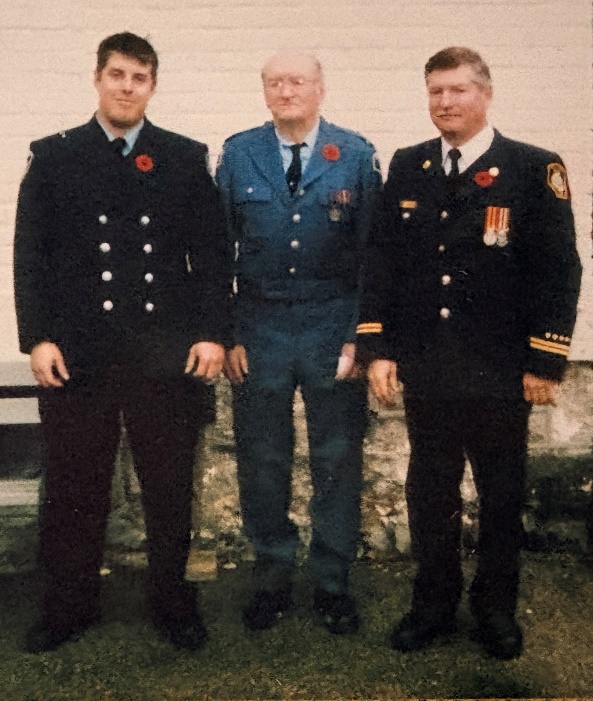
Jack worked at Wabco Equipment of Canada in Paris from 1956 until retirement. He served in the fire service for 37 years. The family history of being in the fire service also inspired Jack’s son Dewey who retired after 45 years as District Deputy Chief, a title now shared with Jack’s grandson, Mark Durward Robinson, who has been a volunteer firefighter since 2005. Mark is now the fourth generation who has served at the Paris fire station.
Jack’s other grandson, J. Paul Robinson, lived in the family home on Victoria Street for a time, and his daughter-in-law Cindy still lives there. Mark Robinson and his business partner Aaron Adams rebuilt the house in 2011 on its original foundation.
Jack was a proud member of the Paris Branch 29 of the Royal Canadian Legion from 1946 until his death on November 7, 2008.